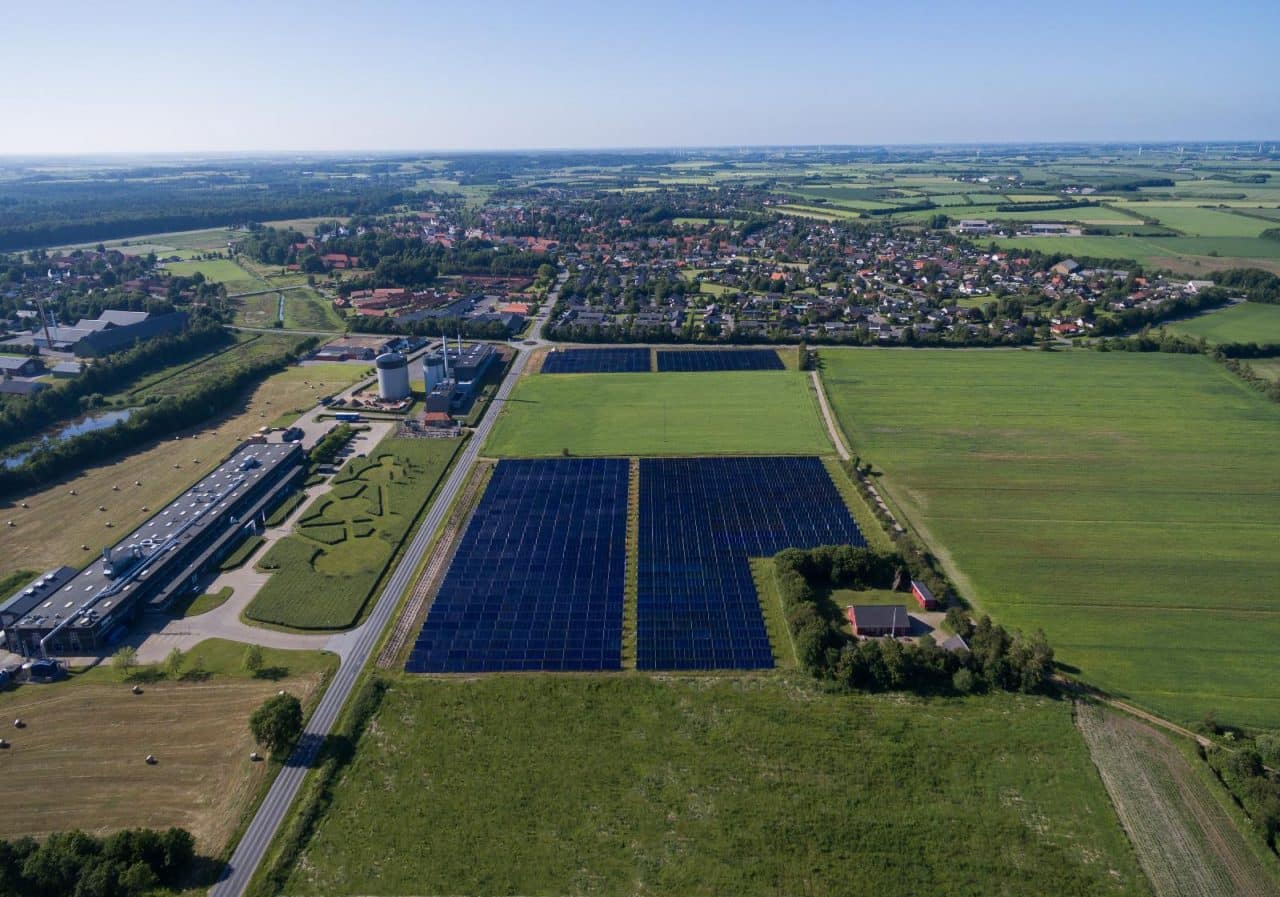
Løgumkloster Fjernvarme is a district heating company which annually supplies 35,000 MWh of heat to over 1,500 customers. Heat is produced with a hybrid heating system consisting of a 3 MW pellet boiler, a 1.3 MW hybrid heatpump, a 3 MW absorption heat pump and a solar collector field of 15,300 m2. Additionally, the plant has two gas engines which are capable of producing 7.6 MW of heat and 6 MW of electricity and a 10 MW gas boiler which acts as back-up.
In 2015, Savosolar delivered a 9,700 m2 solar thermal field to Løgumkloster. The second order of 5,600 m2 was delivered and commissioned in the beginning of 2016. The complete field consists of 1030 Savo 15 SG collectors and covers about 20% of the annual thermal energy need of the district heating network. The largest part of the heat demand is covered by the pellet boiler, but Løgumkloster Fjernvarme has plans to change this in the future by extending the solar field and building a large seasonal water storage.


Brewing is a very suitable application for solar thermal systems, because of the relatively low temperatures used in several production phases.
In the brewery of Flecks in Frohnleiten, a solar thermal system with Savosolar collectors is used to support the hot water production required by the brewing process. The heat from the collectors is stored in four 3,000 litre water tanks for later use in the brewing process. The mounted collectors also act as a rain shield.
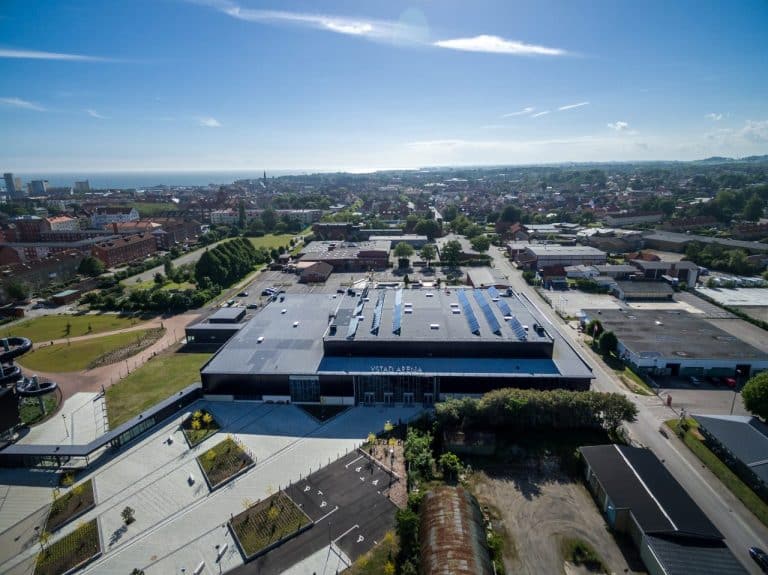
Swimming halls are very well suited for solar thermal production. Typically, their heat consumption is big and the required temperature level tends to be relatively low. In such cases solar thermal collectors are operating with a very high efficiency.
However, quite often swimming halls are closed some time of the year and summertime closure may mean extra challenges for solar heat supply.
For Hämeenlinna swimming hall Savosolar solved this issue by feeding surplus solar energy in summer to the nearby district heating network. Thus, the solar system is producing heat all days and depending on the swimming hall’s actual heat demand, the facility is either a district heating provider or a consumer.
Onnelanpolku nursing home, which was built in 2013, is a so-called near zero energy building. To achieve this classification, the building needs to be well insulated and some of the consumed energy needs to be produced locally. A hybrid heating system for DHW and space heating was realized with the combination of solar thermal collectors and district heating.
Savosolar delivered 240 m² of collector area, which is used to cover 20–30% of the total thermal energy need of the building.